Colour is only one part of upholstery selection
When purchasing dialysis or chemotherapy chairs, upholstery colour helps coordinate the appearance of the department. However, the purchasing decision also needs to address how the surface will be cleaned, which components require separate assessment and how the upholstery can be renewed when necessary.
Hospital procurement teams and distributors should not approve upholstery solely from a photograph or colour chart. Review the foam structure, outer covering and care instructions together. This allows the proposed upholstery to be assessed against its intended conditions of use before ordering.
1. Assess foam and covering separately
Foam forms the support layer within the upholstery. The outer covering is the surface exposed to users and cleaning procedures. A description of one does not establish the properties of the other.
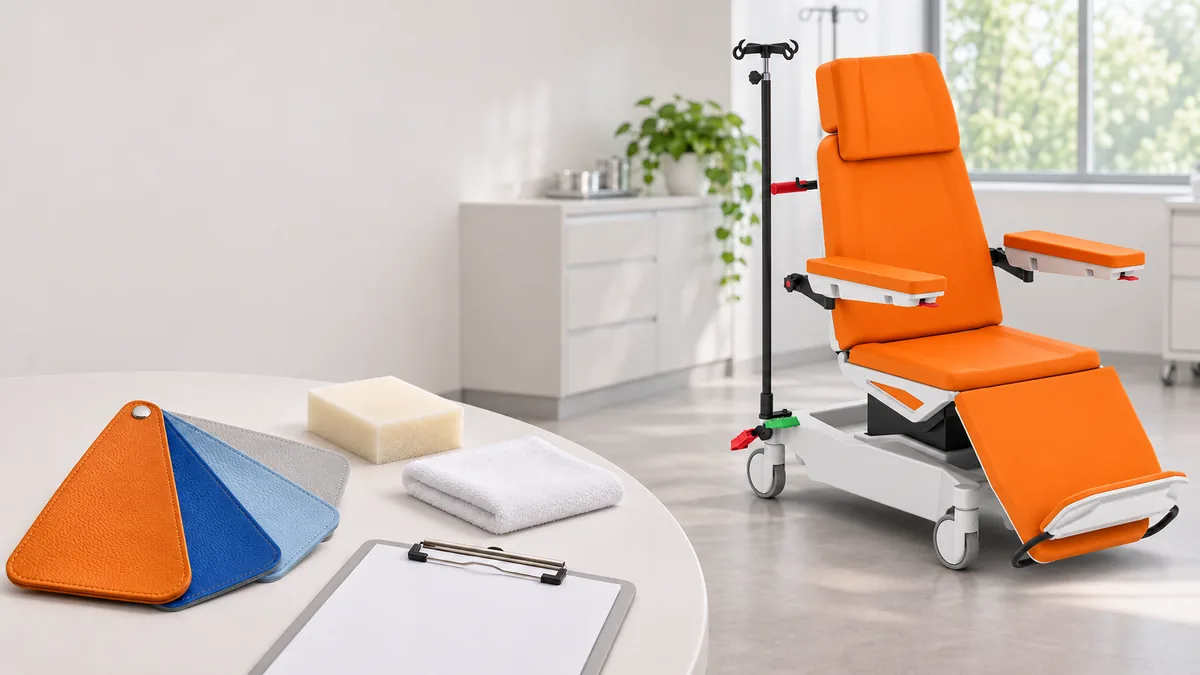
ERPOMED’s ICON-500 product page lists viscoelastic foam upholstery, removable armrests, and adjustable, removable head and lumbar supports. Request covering specifications and care information for the proposed configuration.
Do not treat the term “viscoelastic” as evidence that the outer surface is compatible with a particular cleaning chemical. Likewise, a stated covering property does not establish the structure of the foam underneath.
2. Check compatibility against the products actually used
Before purchasing, list the department’s cleaning and disinfection products. Provide the manufacturer with the trade names and, where available, the active ingredients, working concentrations and application methods.
Request written information covering:
Suitable and unsuitable cleaning products.
Recommended application, rinsing and drying steps.
Instructions for seams, joints and removable components.
An approved method if a sample assessment is planned.
This is not a cleaning protocol. Its purpose is to allow the facility’s practices and the manufacturer’s material-care instructions to be assessed together. Suitability should be determined by the relevant hospital teams.
3. Approve more than the sample’s colour
Where possible, examine a sample of the proposed covering and details of the finished upholstery. Review surface texture, joints, edge finishing and access to the areas that will require cleaning.
Record the colour code, material description and approval date. Identify which characteristics must remain consistent across delivery batches. Distributors should check that the customer-approved sample and the order placed with the manufacturer use the same specifications.
4. Clarify replacement arrangements before ordering
A removable cover and a replaceable upholstered assembly are different things. Ask the manufacturer how each component can be renewed; do not infer removability from photographs.
Request separate information on options for the covering, foam and complete upholstered components. Clarify where the work would take place, who would perform it and how colour matching would be handled. Confirm prices and supply lead times within the quotation.
Complete the procurement record
Keep the approved sample record, care instructions and replacement scope in the same purchasing file. Together, they provide a reference for delivery inspection and future parts enquiries.
Explore the ERPOMED ICON-500 dialysis and chemotherapy chair. Share your chair quantity, preferred colour and departmental cleaning products, and request upholstery configuration and care information alongside your quotation.